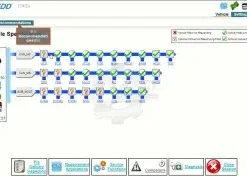
The diagnostic software landscape for Jaguar Land Rover has undergone three major revolutions in the past two decades. Each platform was developed to address the growing complexity of vehicle electronics, the increasing speed of communication networks, and the regulatory requirement for independent workshop access. Understanding this evolution is not merely an academic exercise; it directly affects which software you must purchase, which hardware you need, and which vehicles you can service. Whether you are a classic Jaguar restoration specialist, an independent garage building JLR capability, or an enthusiast maintaining your own fleet, knowing the history of IDS, SDD, and Pathfinder ensures you invest wisely and avoid costly compatibility mistakes.
The History of Jaguar IDS
IDS, which stands for Integrated Diagnostic System, was Jaguar's first comprehensive electronic diagnostic platform, introduced in the late 1990s as vehicle electronics became too complex for simple code readers. Before IDS, Jaguar technicians relied on a mixture of manufacturer-specific scan tools, oscilloscopes, and manual troubleshooting guides. The IDS system brought standardisation to Jaguar workshops, providing a single interface for reading fault codes, viewing live data, and performing basic actuator tests across all electronic control modules.
IDS was a Windows-based application that ran on dedicated Panasonic Toughbook laptops supplied by Jaguar. It communicated with vehicles through a proprietary Jaguar VCI (Vehicle Communication Interface) that connected to the OBD-II port. The software architecture was module-based, meaning technicians manually selected which ECU they wanted to interrogate from a list of installed modules. This approach required solid prior knowledge of vehicle electronics because the technician needed to know which module was responsible for which symptoms.
During its lifespan, IDS supported the full range of Jaguar vehicles up to approximately 2005, including the XJ X300 and X308 series, the XK8, the S-Type, and early X-Types. Land Rover had a separate diagnostic platform during this period (the TestBook system), which meant that Jaguar and Land Rover dealerships used entirely different software until the two companies began merging their toolsets under the Ford ownership era. This separation created significant challenges for workshops that serviced both marques, as they needed two completely different diagnostic setups.
IDS was never a perfect system. It was slow, the user interface was dated even by early 2000s standards, and the module-based approach placed a heavy burden on technician knowledge. However, it was the standard of its time, and many independent Jaguar specialists still maintain an old IDS laptop for working on classic models. At SX-CAN, we occasionally field enquiries from restoration workshops looking for IDS software, though we generally advise them that maintaining legacy IDS capability is increasingly difficult due to lack of support and parts availability.
The hardware associated with IDS has also become increasingly scarce. The original Jaguar VCI units were built to last, but after twenty years of service, many are failing due to capacitor degradation, connector wear, and obsolete internal components. Finding replacement VCIs on the second-hand market is challenging, and the prices for working units have risen dramatically as supply has dried up. Similarly, the Panasonic Toughbook models specified for IDS are now well beyond their practical working life, with battery failures, screen deterioration, and motherboard issues becoming common. For restoration workshops committed to pre-2005 vehicles, we often recommend exploring alternative diagnostic approaches or sourcing fully refurbished IDS kits from specialist suppliers rather than attempting to build a system from individual components.
Why SDD Replaced IDS
The transition from IDS to SDD (Symptom Driven Diagnostics) was driven by several converging forces. Firstly, the merger of Jaguar and Land Rover into a single company under Ford ownership, and later Tata Motors, created a need for unified diagnostic software that could handle both marques. Maintaining separate IDS and TestBook systems was inefficient and expensive. Secondly, vehicle electronics were becoming exponentially more complex. The number of ECUs per vehicle doubled between 2000 and 2005, and the module-based approach of IDS was no longer practical for comprehensive fault finding.
SDD introduced a fundamentally different diagnostic philosophy. Instead of requiring technicians to manually select modules, SDD used a symptom-driven approach. The technician described the symptoms reported by the customer or observed during a road test, and SDD generated a structured diagnostic tree that guided the technician through the most likely causes, tests, and repair procedures. This approach democratised JLR diagnostics, making it accessible to technicians who were not JLR specialists.
From a technical standpoint, SDD was built on Java rather than the native Windows codebase of IDS. This allowed JLR to develop a more portable application that could run on standard Windows laptops without requiring dedicated Jaguar hardware. SDD also introduced support for the J2534 Pass-Thru standard, which meant independent workshops could use third-party VCI devices rather than the expensive proprietary Jaguar interface. This was a significant step towards the regulatory goal of open diagnostics.
SDD also introduced the NGI (New Generation Infotainment) calibration library, which was essential as infotainment systems became increasingly software-defined. The ability to update navigation maps, firmware, and configuration files through the diagnostic tool was a major capability that IDS simply did not possess. For workshops, this meant new revenue streams from software updates and module replacements that previously required dealership visits.
Key Differences Between IDS and SDD
The differences between IDS and SDD extend far beyond the user interface. They represent two entirely different paradigms in automotive diagnostics, and understanding these differences explains why the transition was so significant for the independent workshop community.
Diagnostic Philosophy
IDS was module-centric. The technician selected an ECU, read its fault codes, and interpreted the results based on personal expertise. SDD is symptom-centric. The technician describes the problem, and the software constructs a logical diagnostic path. This shift from expert-dependent to process-guided diagnostics enabled independent garages to tackle JLR vehicles with confidence, even without years of marque-specific experience.
Hardware Requirements
IDS required the proprietary Jaguar VCI and a specific Panasonic laptop configuration. SDD supports any J2534-compatible VCI, including the widely available Mongoose JLR Cable, and runs on standard Windows laptops. This dramatically reduced the cost of entry for independent workshops.
Vehicle Coverage
IDS covers Jaguar vehicles up to approximately 2005. SDD covers Jaguar Land Rover vehicles from 2005 through 2016. There is no overlap in the primary coverage windows, though some very early 2005 vehicles may work with either system depending on build date.
Software Architecture
IDS was a native Windows application with limited portability. SDD is built on Java, making it more adaptable to different hardware platforms, though it also introduces the dependency on specific Java versions that remains a challenge today.
Programming Capability
SDD introduced far more extensive module programming and calibration capabilities than IDS. While IDS could read and clear codes and perform basic tests, SDD can programme new modules, update firmware, configure vehicle options, and perform guided repairs that require electronic calibration.
Vehicle Coverage by Diagnostic Platform
Knowing which platform covers which vehicles is essential for workshop planning and investment decisions. The table below provides a clear reference for the three major JLR diagnostic platforms.
| Platform | Year Range | Primary Vehicle Coverage | Current Status |
|---|---|---|---|
| Jaguar IDS | 1998-2005 | XJ X300/X308, XK8, S-Type, early X-Type | Obsolete, unsupported |
| JLR SDD | 2005-2016 | Range Rover L322/L405, Discovery L319/L319A, Freelander 2, XF, XJ X351, F-Type | Supported for legacy vehicles |
| JLR Pathfinder | 2017-present | L663 Defender, L460 Range Rover, L461 Range Rover Sport, I-PACE, F-PACE, E-PACE | Current active platform |
Note: Vehicles built during transition years (2005, 2016-2017) may require verification of the exact build date and electronic architecture to determine the correct diagnostic platform.
Data Migration and Legacy Support
When JLR dealerships transitioned from IDS to SDD around 2005-2006, the process was not seamless. Historical diagnostic data from IDS sessions was not automatically migrated to SDD. This created significant challenges for warranty claims and recurring customer issues, as technicians lost access to historical fault patterns and previous repair records.
Independent workshops faced an even more difficult transition. Many had invested heavily in IDS hardware and training, only to find themselves with obsolete equipment within a few years. The J2534 standard helped soften this blow by allowing workshops to reuse their Pass-Thru devices with SDD, but the software licence and training investment was lost.
Today, the legacy support situation is challenging for IDS users. Jaguar Land Rover no longer provides IDS software updates, licence renewals, or technical support. The software is effectively abandoned. Workshops that still need IDS capability for classic Jaguar restoration must rely on archived software, second-hand licences, and community knowledge. This is a precarious position, as operating system incompatibilities and hardware failures can render an IDS setup permanently unusable with no recourse.
The transition period between IDS and SDD was particularly difficult for independent Jaguar specialists. Many had built their reputation on deep IDS expertise, learning the idiosyncrasies of each control module and developing custom diagnostic routines. The shift to SDD meant abandoning years of accumulated knowledge and starting fresh with a symptom-driven interface that, while more accessible, initially felt restrictive to experienced technicians. Workshop owners also faced the financial burden of replacing proprietary Jaguar hardware with J2534-compatible devices, upgrading laptops to meet Java requirements, and purchasing new software licences during a time when the economic justification was not immediately clear.
SDD is in a similar but less severe position. While JLR no longer actively develops SDD, the software remains functional for the vehicles it covers, and the independent supplier ecosystem continues to provide licences and support. At SX-CAN, we supply fully licensed SDD packages with calibration libraries and ongoing technical support, ensuring that workshops can continue to service 2005-2016 vehicles without concern.
Modern Alternatives: Pathfinder for 2017+
Just as SDD replaced IDS, Pathfinder has replaced SDD for modern vehicles. JLR Pathfinder was introduced for the 2017 model year and represents another paradigm shift in diagnostic capability. Where SDD was a guided, symptom-driven tool, Pathfinder is a more flexible, module-oriented platform that provides deeper access to ECU programming and configuration.
Pathfinder is essential for any workshop that services current-generation JLR vehicles. The L663 Defender, L460 Range Rover, L461 Range Rover Sport, and all current Jaguar models require Pathfinder for anything beyond basic OBD-II code reading. The software operates through TOPIX Cloud for online programming, enabling dealer-level software updates and module replacements from independent workshops.
From a hardware perspective, Pathfinder requires a DoIP-capable VCI, such as the DA-DoIP VCI D-PDU J2534 PassThru or The JLR DOIP VCI WF Bosch Genuine. These devices communicate over Ethernet rather than traditional CAN, reflecting the significantly faster data networks in modern vehicles. A standard Mongoose cable or basic J2534 device will not work with Pathfinder, regardless of how well it performs with SDD.
For workshops that service a broad range of model years, the practical reality is that you need both SDD and Pathfinder. There is no single tool that covers the entire JLR history from 1998 to the present day. At SX-CAN, we offer a JLR Software SDD Pathfinder CCF Seed Key Calculator that includes SDD, Pathfinder, and CCF Editor at a discounted price, providing everything you need for complete vehicle coverage. We also provide guidance on whether you need IDS capability for specific restoration projects, though we generally recommend alternative approaches for pre-2005 vehicles due to the difficulty of maintaining IDS.
Choosing the right diagnostic platform for your workshop depends on your customer base, your technical expertise, and your growth plans. If you specialise in classic Jaguar restoration and primarily work on pre-2005 vehicles, maintaining an IDS setup (or sourcing alternative classic diagnostics) may be worthwhile despite the challenges. However, most independent workshops will find that starting with SDD for the 2005-2016 range and adding Pathfinder for newer vehicles provides the best return on investment. The SDD market remains active with strong demand for diagnostics, module programming, and feature activation on popular models such as the L322 Range Rover, Discovery 3 and 4, and the Jaguar XF and XJ X351. Pathfinder, meanwhile, is essential for capturing work on the latest Defender, Range Rover, and Jaguar models that are increasingly common in independent workshops as vehicles exit their manufacturer warranty periods.
Whichever platform you choose, the key to success is investing in genuine software, quality hardware, and ongoing training. The JLR diagnostic landscape has evolved significantly from the IDS era, but the fundamental principle remains the same: the right tool, in the hands of a knowledgeable technician, delivers dealer-level results at a fraction of the cost. At SX-CAN, we are committed to helping you navigate this evolution with expert advice, quality products, and reliable support.